What is the 4-Stage Balance Test?
The 4-Stage Balance Test is a short check of how steady you are standing still. You hold four positions, each a little harder than the last, for ten seconds each. It comes from the CDC's STEADI program, which healthcare providers use, and it is the first of three self-tests in the balance book.
Before you start
- Stand next to a countertop, or a sturdy chair placed securely against a wall, so you can hold on.
- Ask someone to stand beside you.
- Do the test barefoot.
- Start by holding on. If you feel steady, try to let go and hold the position on your own, with your helper close by.
- Hold each position for ten seconds before moving on to the next one.
- Stop if you need help, or if your feet move out of position. That is your result for today.
The four positions
- Position 1: Feet together. Stand with your feet close together, so they are touching. Hold for ten seconds. If you can, move on to position 2. Otherwise, note how many seconds you held it.
- Position 2: Half tandem. Place one foot slightly in front, so the inside of that foot touches the big toe of your other foot. Make a note of which foot is in front. Hold for ten seconds. If you can, move on to position 3. Otherwise, note how many seconds you held it.
- Position 3: Tandem. Place one foot directly in front of the other, so the heel of your front foot touches the toes of your back foot. Make a note of which foot is in front. Hold for ten seconds. If you can, move on to position 4. Otherwise, note how many seconds you held it.
- Position 4: One leg. Bend one knee and lift that foot behind you, so you are standing on one leg. Make a note of which foot you are standing on. Hold for ten seconds and note how long you held it.
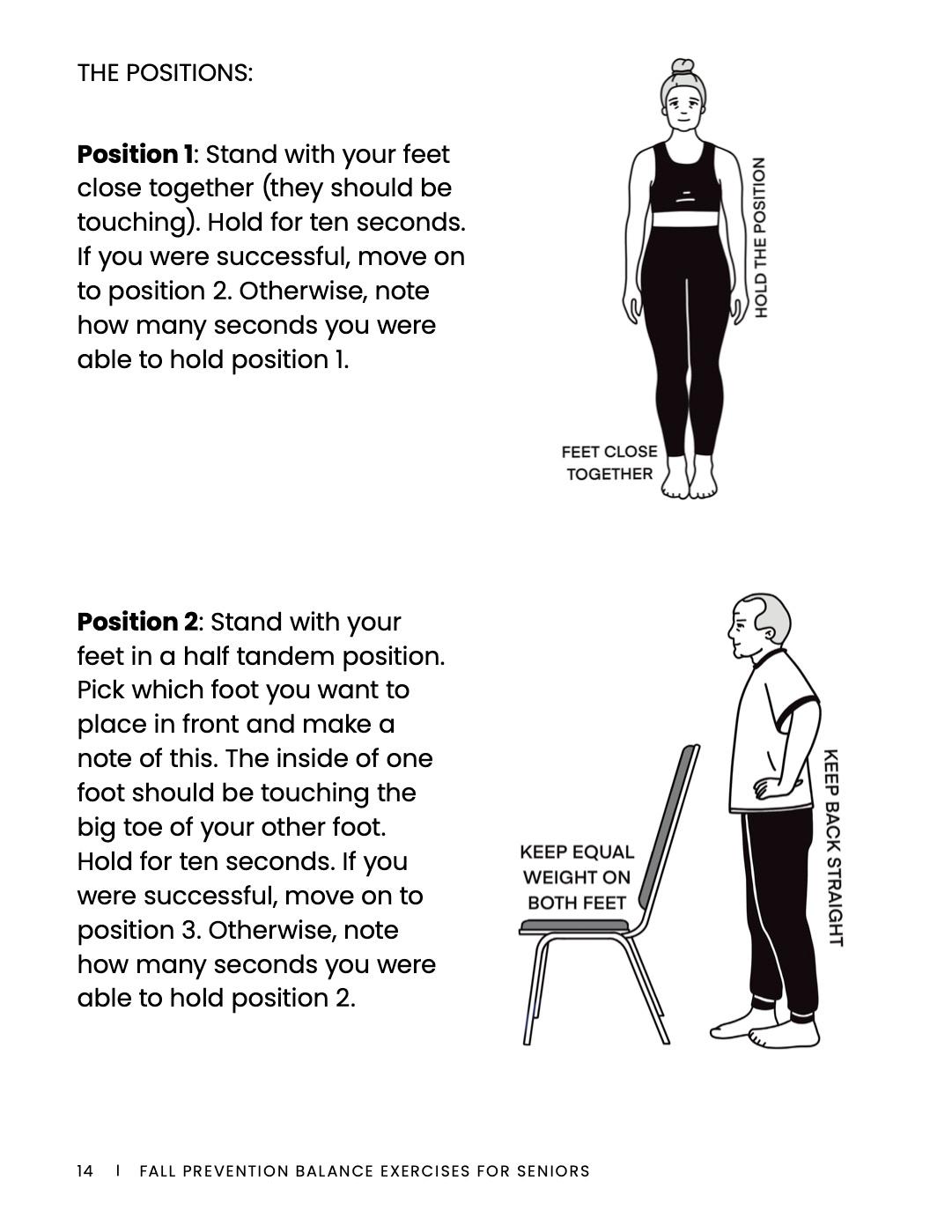
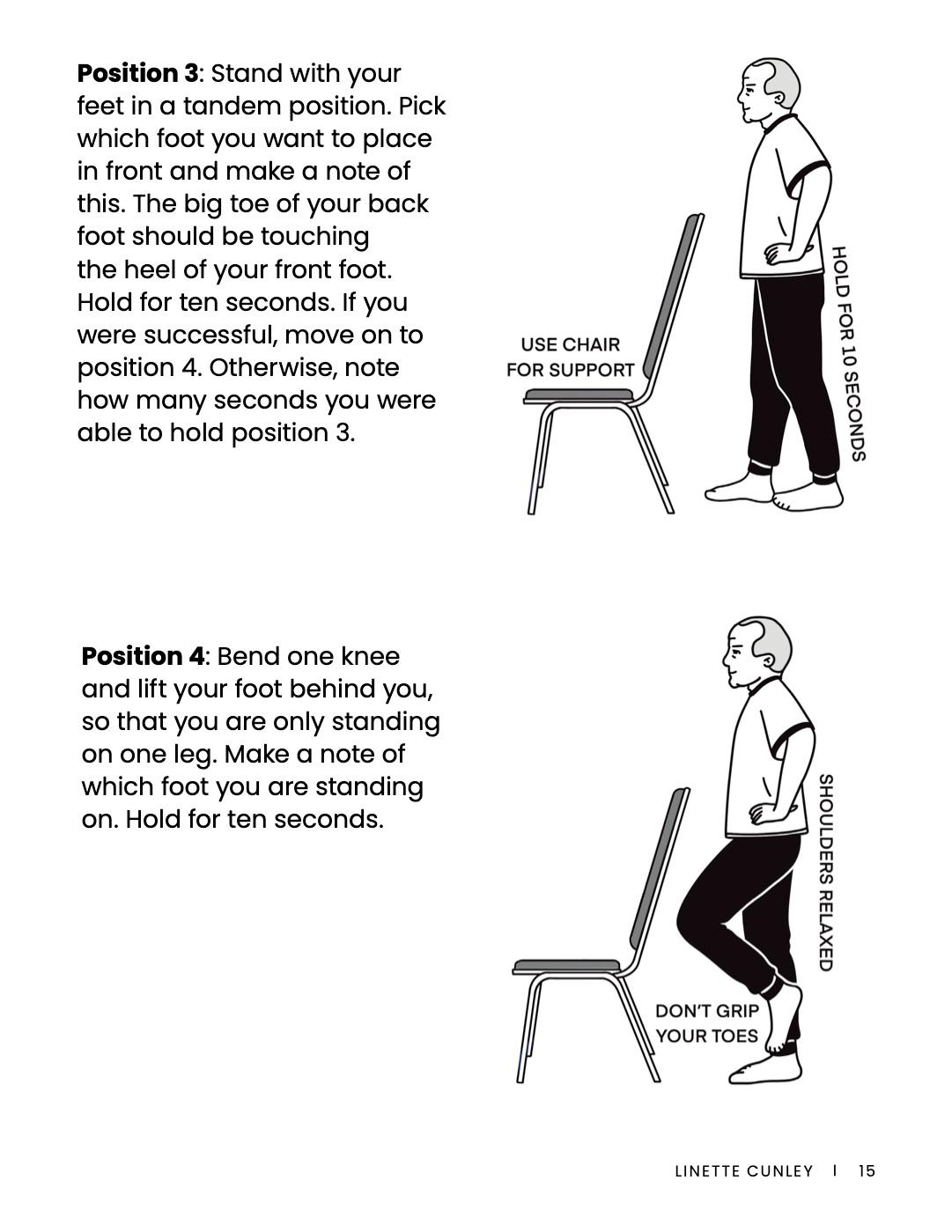
Illustrations from Fall Prevention Balance Exercises For Seniors.
What your result means
Write down how many seconds you held each position, and which foot you used. Your result is a starting point, not a grade. In the balance book, this test and two more short tests help you choose your starting level for the 28-day plan. Take the test again after four weeks, using the same feet, to see how far you have come.
This test is a general guide to where to begin, not a medical assessment. If you have fallen recently, feel dizzy, or have a health condition, talk to your doctor or physical therapist first. The 4-Stage Balance Test comes from the CDC's STEADI program.
Questions readers ask
Who created the 4-Stage Balance Test?
The 4-Stage Balance Test comes from the CDC's STEADI program for healthcare providers. The balance book uses it as the first of three self-tests to help you choose a starting level.
How long do you hold each position?
Ten seconds each. If you can hold a position for ten seconds, move on to the next one. If not, note how many seconds you held it. That is your result for today.
What do I need to do the test?
A countertop, or a sturdy chair placed securely against a wall, bare feet, a way to count ten seconds, and someone to stand beside you.
How often should I take the test?
Take it before you start, then again after your first 28-day plan, using the same feet each time, so you can see your progress.
Is this a medical assessment?
No. It is a general guide to where to begin. If you have fallen recently, feel dizzy or have a health condition, talk to your doctor or physical therapist first.
Check with your doctor before starting a new exercise program, and stop if anything hurts.